

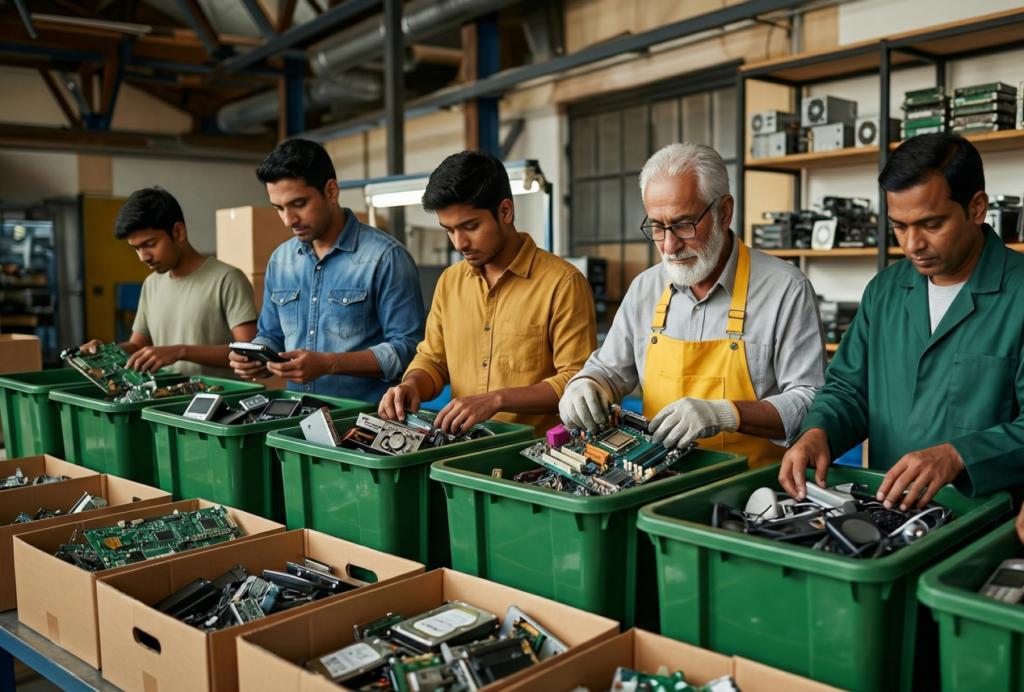
Electronic waste is often viewed as an environmental burden. Discarded laptops, outdated smartphones, obsolete servers, and damaged industrial electronics are frequently treated as liabilities. However, beneath this perception lies a powerful reality: e-waste is one of the world’s richest urban mines.
Advanced material recovery is transforming electronic waste from an environmental challenge into a sustainable economic opportunity. In today’s circular economy, waste is no longer the end of a product’s life; it is the beginning of a new resource cycle.
The Hidden Value in Electronic Waste
Electronic devices contain valuable materials such as copper, aluminium, gold, silver, palladium, and high-grade plastics. These resources require significant energy, mining activity, and environmental disruption to be extracted from natural reserves.
When electronics are improperly discarded, these valuable materials are lost. Worse, hazardous components contaminate soil and water systems.
Advanced material recovery changes this equation. Through scientific dismantling, mechanical separation, and controlled processing systems, recyclers can extract high-value metals and reusable components safely and efficiently.
What was once waste becomes wealth.
Sustainability Through Resource Efficiency
From a sustainability perspective, advanced material recovery plays a crucial role in reducing dependence on virgin raw materials. Mining operations are energy-intensive and environmentally destructive. By recovering metals from end-of-life electronics, we reduce:
-
- Carbon emissions associated with mining and refining
- Water consumption in extraction processes
- Habitat destruction caused by mineral exploration
- Landfill burden and toxic contamination
Reintroducing recovered metals into manufacturing supply chains strengthens circular-economy principles, keeping materials in use for longer and minimising the environmental footprint.
The Business Case for Material Recovery
Beyond environmental benefits, advanced material recovery presents strong business opportunities.
1. Economic Value Extraction
Electronic waste contains concentrated metal content. In some cases, the gold concentration in circuit boards exceeds that found in traditional gold ore. Recovering these metals creates significant revenue streams for authorised recyclers.
For producers and corporates, partnering with structured recovery systems can unlock:
-
- Cost-efficient recycling solutions
- Certified material traceability
- Circular supply chain participation
This shifts waste management from a cost centre to a value-generating function.
2. Strengthening ESG Performance
Environmental, Social, and Governance (ESG) metrics increasingly influence investor decisions. Companies that support advanced material recovery demonstrate:
-
- Responsible resource management
- Reduced environmental impact
- Compliance with environmental regulations
- Alignment with global sustainability standards
Advanced recovery systems provide measurable sustainability outcomes, a critical factor in corporate reporting and investor confidence.
3. Supply Chain Resilience
Global supply chains are increasingly vulnerable to resource shortages and geopolitical disruptions. Recovering metals domestically from e-waste reduces reliance on imported raw materials.
By investing in circular resource systems, India can strengthen material security while creating local employment opportunities.
Technology as the Enabler
Modern material recovery relies on technology-driven processes rather than manual dismantling.
Advanced facilities integrate:
-
- Automated shredding and segregation systems
- Magnetic and eddy current separation
- Controlled metal recovery units
- Pollution control and emission management systems
These technologies improve recovery efficiency while ensuring environmental compliance and worker safety.
Unlike informal recycling practices, structured facilities maximise resource extraction while minimising workers’ exposure to toxic risks.
Environmental Impact Reduction
Improper e-waste disposal releases hazardous substances such as lead, mercury, and brominated compounds into ecosystems. Burning wires to extract copper, acid-leaching circuit boards, and open dumping cause irreversible environmental damage.
Advanced material recovery facilities operate under controlled environments with emission control systems, wastewater treatment, and safe dismantling protocols.
This ensures that:
-
- Toxic substances are safely neutralised
- Valuable materials are scientifically extracted
- Non-recyclable fractions are responsibly disposed of
Sustainability is not just about recovery; it is about responsible processing.
Creating Circular Business Models
Advanced material recovery enables businesses to participate in closed-loop systems.
Producers can:
-
- Reintroduce recovered metals into manufacturing
- Reduce procurement costs through recycled inputs
- Strengthen circular economy commitments
- Meet Extended Producer Responsibility (EPR) obligations
This transforms traditional linear models (produce-use-dispose) into circular models (produce-use-recover-reuse).
Such systems enhance both profitability and environmental performance.
Employment and Social Impact
Formal material recovery operations generate employment across collection, segregation, logistics, processing, compliance documentation, and sustainability auditing.
By integrating informal scrap workers into structured systems, the industry can create safer working environments while improving income stability.
Advanced recovery is not only an environmental solution but also a socio-economic opportunity.
As electronic consumption continues to rise, so will e-waste generation. The future of sustainability lies in recognising waste as a resource reservoir.
Advanced material recovery will play a central role in:
-
- Reducing environmental degradation
- Conserving finite natural resources
- Strengthening domestic supply chains
- Enhancing corporate sustainability performance
Businesses that embrace circular thinking today will gain a competitive advantage tomorrow.
The transition from waste to wealth is not theoretical; it is already happening.
Advanced material recovery transforms discarded electronics into valuable raw materials, reducing environmental harm while generating economic opportunity. For forward-looking businesses, it offers a pathway to stronger ESG performance, regulatory compliance, and long-term resilience.